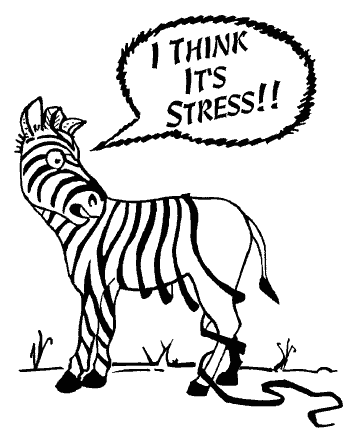
There are many types of stress, and each type has a
different consequence. I was surprised to learn that persistent stress can actually
lead to shrinking of the brain, depending on the type of stress. This unbroken
anxiety targets different portions (mainly parts of the brain that deal with
metabolism and emotion). According to Dr. Rajita Sinha (a professor of
psychiatry and neurobiology at Yale University School of Medicine and director
of the Yale Stress Center), single traumatic events are not considered to be
the most detrimental to physical/mental health, but rather, the consistency of
anxiety over a long period of time. She states, “The key take home message is
that across the board the area that is most vulnerable to stress of any kind is
the prefrontal cortex. It’s important for top-down regulation of our emotions,
cognition, desires, and impulse control.” The prefrontal cortex (grey matter)
is a precious part of the brain that needs to be protected. When that portion
of the brain is massacred with stress, it becomes more difficult to resist
addictive behaviors (drugs, alcohol, etc.). It also is more challenging to
adapt to unexpected changes (adding to the anxiety continuum). http://healthland.time.com/2012/01/09/study-stress-shrinks-the-brain-and-lowers-our-ability-to-cope-with-adversity/
Currently, our generation is experiencing an overwhelming
amount of new stressors due to new technologies, higher expectations, pressure
of acceptance in a new age, and the fast tracked society that surrounds us. Anxiety
has a negative connotation, but it does serve as a natural motivator. As stated
by T.S. Elliot, anxiety is “the handmaiden of creativity." Stress, in small doses, can be very
beneficial. It is known to increase testosterone levels during a “fight or
flight” experience. For example, this would enhance an athlete’s performance at
an important meet/game/match when feeling anxiety.
Although anxiety can be beneficial in small doses, those
whom feel anxiety on a daily basis are living an unhealthy mental/emotional
lifestyle. One of the most effective ways to reduce stress is by merely
improving communication skills. Learning how to say “no” goes a long way.
Creating barriers is something that will improve quality of life in many
aspects even beyond anxiety. It gives a person freedom to live for them. Since
chronic anxiety has the ability to actually change the brain for the worse, it
is important to take every step to a healthier you.
For more information on the affects of anxiety and other helpful tips to combat anxiety watch this quick youtube clip from "Big Think" series. It's great!
http://www.youtube.com/watch?v=jRbGjWwNY-k
http://www.youtube.com/watch?v=jRbGjWwNY-k

I thought it was interesting how stress can shrink the brain if it is continuous. I had never heard that before and that information definitely makes me want to look into it and research it more. I also found it interesting how stress can make it harder to resist bad habits. It really is amazing what all stress can do to not only our bodies, but our minds as well. I like that you also have links in your work to support the research and evidence you have found to support your argument.
ReplyDeleteI always knew stress could be detrimental to one's health but not in the physical ways you discussed in your article. I thought stress was more mental and emotional, but learning about the physical effects completely surprised me! It is scary to me that stress has this significant of an impact on our bodies. Thank you for providing ways to reduce our stress levels so these consequences never get so severe.
ReplyDelete